

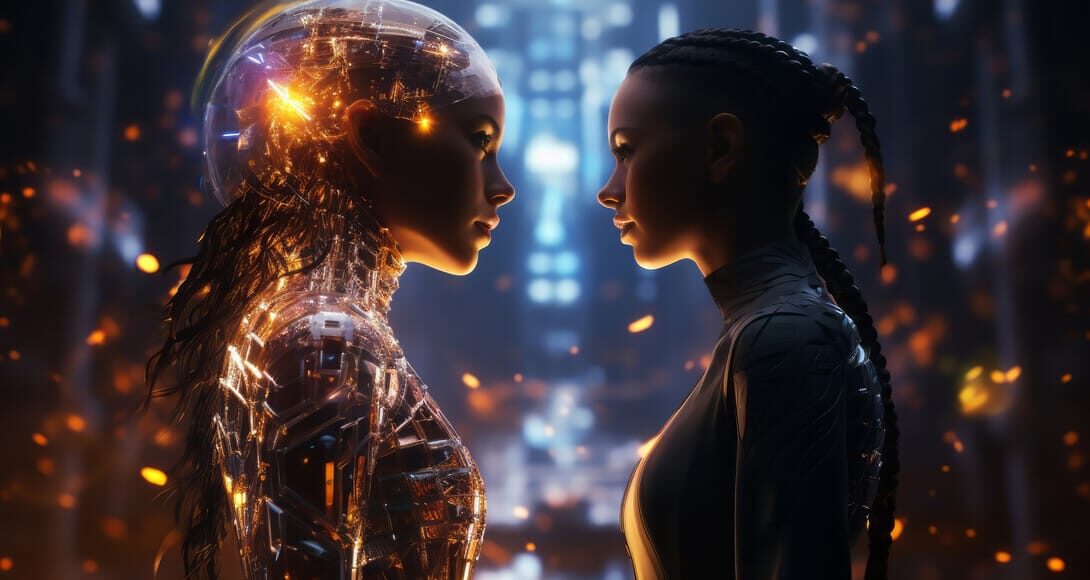

What happens to human connection when AI helps tell our stories?
Today, when you scroll through TikTok, you may have stumbled upon some AI-generated movies. Some have a storyline based on a betrayed lover or parody reality shows like Love Island. These videos often keep the viewers glued to the screen one episode after another, and some going to an extent of subscribing to these shows. Although the views end up increasing, showing how much popularity they have gained, regardless of whether these people are watching to be entertained or to just mock them for their flaws. The real question is, do the viewers connect with or appreciate the creative process that comes with it?
I remember the first time I watched the film Titanic; I was drawn into the story, not just because of its dramatic storyline, but because of the emotions it carried. One scene in particular was when Jack is on the edge of the ice, his life slipping away. That moment with Rose and the raw pain between them was so devastating that it left a lasting mark on me. It was real, human and unforgettable.
There is a difference between producing a good story and producing a good story that carries a genuine human touch. While AI-generated videos are becoming easier and cheaper to produce, is the convenience of AI worth sacrificing the human connection that makes filmmaking an art?
Filmmaking draws much of its power from human experience and emotions. Every creative decision contributes to this connection. A cinematographer gets to know the perfect lighting and position that communicate the message better to the audience. The editor knows when to pause and let the silence speak. Actors do more than recite lines from a script. They draw from their own experience and understanding of human behaviour to bring characters to life
Christopher Nolan, a renowned filmmaker, emphasises the importance of human creativity in a film. In an interview after the release of his epic film The Odyssey, Nolan acknowledges AI as a useful tool but also states that it cannot replace human creativity. He argues that ‘These models are essentially sampling algorithms, and unless you give something new, they will never produce anything new.’
The limitations of AI-generated filmmaking are also illustrated in the AI- generated version of Odyssey associated with Elon Musk’s Grok AI. It attracted criticism for its presentation. Critics questioned the lifeless appearance of the characters and their unnatural expression. The Guardian film critic, Peter Bradshaw, described the dramatic moments as, ‘Every single dramatic moment is motiveless and meaningless as the movement of shapes on a laptop screensaver.’ The criticism highlighted the distinction: while technology can generate impressive visuals, creating a film requires more than putting images together.
This does not mean that AI should be completely excluded from filmmaking but rather can be a valuable creative assistant. Filmmakers can use it to visualize scenes, develop storyboards and overall using it to achieve results that earlier would have needed greater resources.
Philip Karanja, a Kenyan film producer and director, during an interview with Citizen Digital, highlights the enduring value of human relationships in an increasingly AI-driven world. He states, ‘Anyone can generate images on AI, but there is the creativity that can’t be realised without a professional.’
Technology can generate images, imitate voices and construct entire storylines, but the human experience that inspires meaningful stories remains invaluable. The imperfections in films are what bring life to them. The hesitation in line delivery, the pain in every tear, the silent gaze into one’s soul are what inspire meaningful stories that remain invaluable.
AI seems to be replacing the art of filmmaking by reducing its value, but can it really replace the human touch in filmmaking? The future of filmmaking is not just about choosing between AI and human creativity, but finding a balance between the two. In the end, the audience does not just watch a good storyline; rather, they want to connect and resonate with what they are watching.


